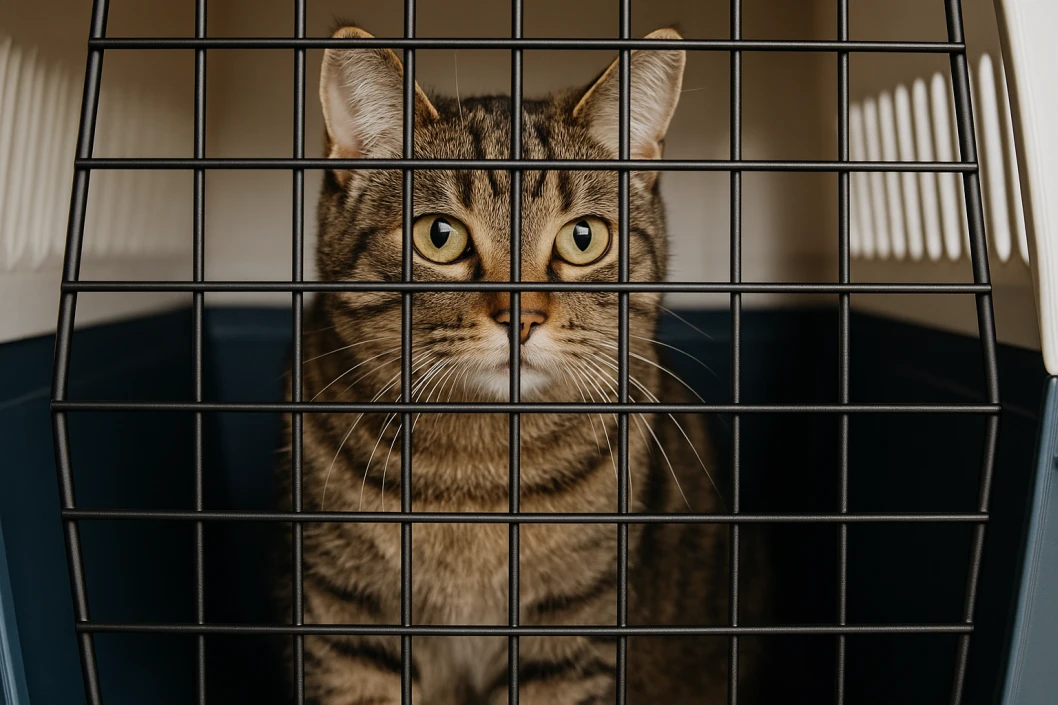
1. Choose a suitable transport cage
A sturdy and well-ventilated transport cage is essential. It should be spacious enough for the cat to stand comfortably, but not so large that it slides during the journey.
2. Get your cat used to transportation
Before the trip, leave the cage open in the house so that the cat gets used to it. Put toys or blankets with a familiar smell inside to reduce anxiety.
3. Traveling by car
- Secure the cage with the seat belt for stability.
- Maintain a comfortable temperature in the car.
- Never leave the cat loose in the car – it can be dangerous for both the cat and the driver.
4. Traveling by train
Many railway companies allow cats to be transported in special cages. It is recommended to check the rules before departure and reserve a seat in a quiet carriage.
5. Traveling by plane
Each airline has different rules regarding the transport of animals. Some allow the cat to stay in the cabin, under the seat, while others transport it in the hold of the plane. Find out in advance and choose the safest option.
6. Hydration and feeding
Make sure your cat has access to water during breaks. Avoid giving it a lot of food right before the trip to prevent gastric discomfort.
7. Veterinary consultation before the trip
Especially for long journeys, a medical check-up is recommended. The veterinarian can recommend anti-stress solutions or, in special cases, mild medication for calming.
Traveling with your cat may seem complicated, but with correct preparation it becomes a safe and less stressful experience for both you and your feline companion.
Follow our blog for more tips on how to take care of your cat in any situation.